
What the 22-Hour Rule Means
The 22-hour rule means your aligners stay in your mouth for about 22 hours a day. The other two hours are for meals, drinks other than water, and cleaning. Teeth move with steady, gentle pressure, so short wear times give that pressure too little time to work. It’s 7 a.m. and you’re standing in your kitchen with your trays in one hand, coffee in the other. You’ve got a meeting near Belmar at nine, and you’re wondering if one more hour out really matters.
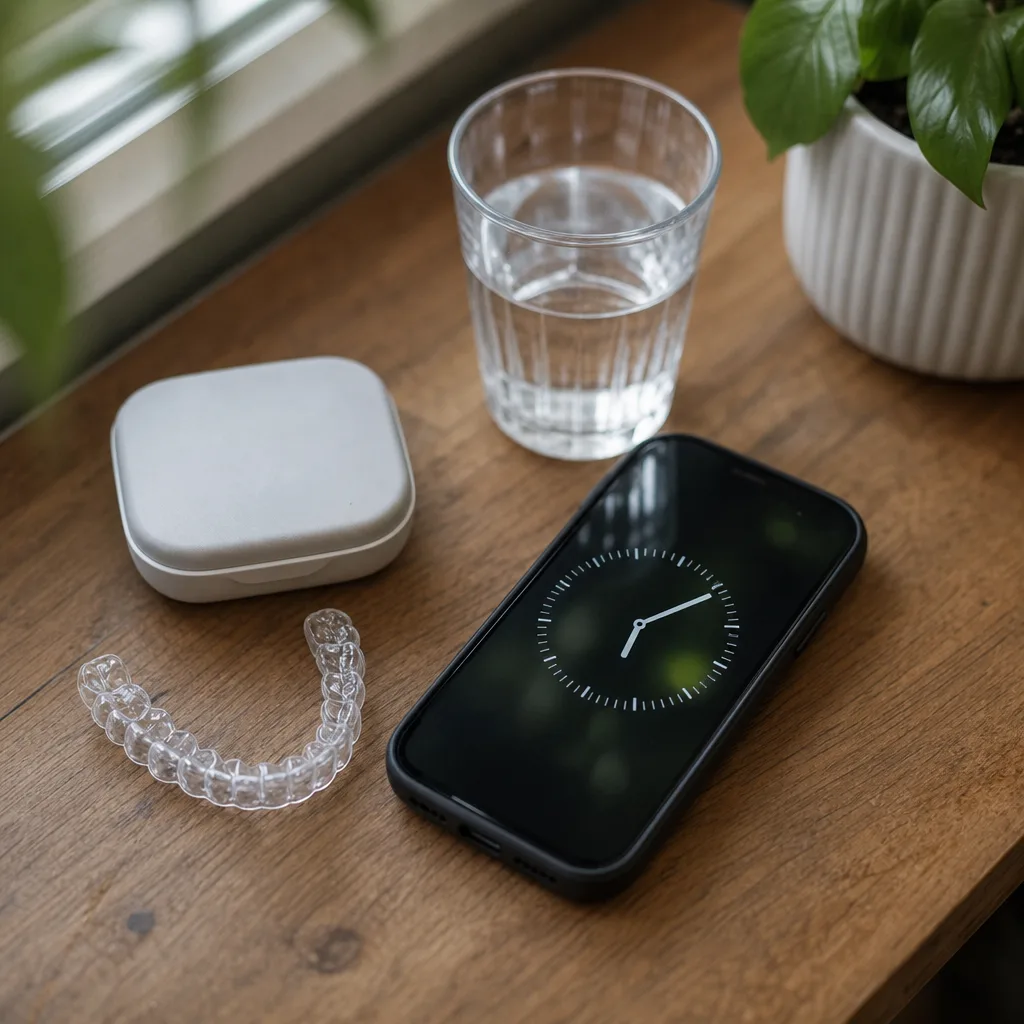
We hear some version of this question almost every week. You don’t want to waste months of effort. You also don’t want your aligners running your whole life. Here’s the simple version. The company that makes Invisalign Clear Aligners recommends wearing them 20 to 22 hours a day. Most dentists treat 22 hours as the goal. That leaves you about two hours out of your mouth, total, across the whole day. Why so strict? Teeth don’t move because you push on them once. They move because of steady pressure over time. Your body slowly reshapes the bone around each tooth as it shifts. That process likes consistency, it doesn’t do well with stops and starts. Think of it like holding a door open against the wind. Let go for a bit and the door swings back. Your teeth act a little like that. When the trays come out for long stretches, teeth can start drifting back toward where they started. So the next time you put the trays in, they may feel tight or not seat all the way. Those two hours aren’t free time to skip wear. They’re a budget. Here’s what that time is usually meant to cover:
- Breakfast, lunch, and dinner, plus a quick snack if you need one
- Coffee, tea, or anything else that isn’t plain water
- Brushing and flossing before your trays go back in
- A fast rinse of the trays themselves
It adds up fast. A long lunch and a slow coffee can eat most of your budget by noon. But a few small habits help, like brushing right after meals so the trays go straight back in. Now flip it around. Wearing trays for only 30 minutes a day isn’t a small slip. It’s barely treatment at all. Your teeth spend about 23 and a half hours with no pressure, so there’s very little chance for them to move the way your plan expects. We had a Lakewood patient, a busy teacher, who wore her trays mostly at night for a few weeks. She figured sleep hours would do the heavy lifting. By her next visit, her new trays didn’t fit right. Nothing was ruined. But we had to slow down and check her plan before moving forward. That’s the part most people don’t realize. Missed hours don’t just pause progress. They can make the next tray harder to wear, and that slows everything down. The good news? You don’t have to be perfect to be on track. Small fixes to your daily routine usually matter more than willpower. If your trays feel loose or tight, or you’ve had a rough few weeks, we’d rather look at your fit than have you guess. Call (303) 989-3192
Why Sustained Wear Time Moves Teeth
A patient sits down for her check-in and pops in her next tray. It won’t snap into place. “I’ve been wearing them,” she says. “Mostly at night.”

We hear some version of that almost every week in our Lakewood office. And it’s almost never laziness. It’s usually a long lunch at Belmar, or a coffee sipped at a desk for three hours. Here’s what nobody explains up front. Teeth don’t move because of strong pressure. They move because of steady pressure. Time does the work. Not force. Each tooth sits in a socket in your jawbone. A thin layer of fibers called the periodontal ligament holds it there. That ligament is what senses pressure and tells your body to start reshaping bone. But it only keeps working while the signal stays on. So what’s happening while your aligner is in? Roughly this:
- The aligner presses lightly on one side of the tooth.
- Cells in the ligament feel that pressure and begin clearing bone in the tooth’s path.
- On the other side, new bone slowly fills in behind the tooth.
- Over time the fibers and gums settle around the tooth’s new spot.
Take the aligner out for hours and that signal fades. The fibers act a bit like stretched rubber bands. They start pulling teeth back toward the spot they came from. Now picture wearing your trays for just 30 minutes a day. Your teeth get a short nudge. Then they get 23 and a half hours to drift back. It’s like pushing a stalled car a few feet and walking away, it just rolls back to the curb. Twenty-two hours isn’t a random number. It leaves room for meals, brushing, and cleaning your trays. And it keeps that gentle pressure on for most of the day. Each tray is designed to move your teeth a small step during its wear period. If your teeth fall behind, the next tray was made for a smile you don’t have yet. That’s when trays feel extra tight or show little gaps at the edges. Most people don’t realize how fast missed hours stack up. Say you spend a Saturday at Bear Creek Lake Park. Your trays sit in the case all afternoon. One day like that isn’t a big deal, but three or four a week quietly adds up. This is why tray fit matters more than any calendar. A careful Invisalign dentist in Lakewood checks how each aligner seats at every visit. Your progress photos alone don’t tell that story. If your trays have started feeling off, try not to guess at what’s going on. A quick look at the fit tells us a lot. We can talk through what to do next. Call (303) 989-3192 That same focus carries through the practical Invisalign clear aligners in Lakewood guidance our team provides to local families.
One Short Day vs. a Repeated Pattern: What Really Matters
Picture this. You spent Saturday hiking Green Mountain, then grabbed dinner at Belmar with friends. Your aligner case sat in the car all day. By bedtime, you’d worn your trays for maybe 30 minutes total.

Now you’re lying awake, wondering if you just undid months of work. Take a breath. One short day is not the same as a short-wear habit. We see this worry all the time in our Lakewood office, and it’s usually much smaller than people fear. Your teeth do start to drift back when the trays come out. That’s just how teeth behave. But one day of drift is small, and your aligners are designed to guide teeth back on track once you’re wearing them again. So the next morning, your tray may feel tight. That snug feeling is normal after a gap. And here’s the part most people don’t think about. The real trouble isn’t one bad Saturday, it’s when every Saturday looks like that. Or every workday. Short wear that keeps happening adds up. Each tray is built to move your teeth a tiny bit. If your teeth never finish that move, the next tray doesn’t fit the way it should. Then the one after that fits even worse. Our team calls this “losing tracking,” and it’s the thing we really want to catch early. How do you know which one you’re dealing with? A few signs can help you check. These don’t tell you what’s going on with your teeth, only that it’s time to have us take a look.
- Your tray doesn’t snap fully into place, even after a full day of wear
- You can see a small air gap between the aligner and the tip of a tooth
- Short-wear days have happened more than once or twice this month
- Each new tray hurts more than the last, and it’s not easing after a few days
- You’ve been skipping ahead or staying on old trays without checking with us
If none of those sound like you, you’re probably looking at a one-off day. If a few of them do, it’s not a failure. It’s just information. Here’s what we usually suggest after a single short-wear day. It’s simple, and it’s the same plan we give patients who call us on a Monday morning feeling guilty.
- Put your current tray back in as soon as you can.
- Don’t move to your next tray early to “catch up.”
- Wear your current tray full-time for an extra day or two if it feels loose or doesn’t seat well.
- Use your aligner chewies to help the tray sit snug against your teeth.
- Call us if the fit still feels off after a couple of days.
That’s really it. Most of the stress comes from not knowing, not from the missed hours themselves. One patient told us she’d “ruined everything” after a long weekend at Bear Creek Lake Park. Her trays still fit fine. A few days of steady wear, and she was right back where she’d left off. Another patient had been wearing trays only at night for weeks. His case took more work to get back to, and he wished he’d called sooner. Same problem, very different stories. So if short-wear days are becoming a pattern, don’t wait for the next tray to tell you something’s wrong. We’d much rather see you early. A quick check helps us decide if your plan needs a small change. You can learn more about how we guide Invisalign Clear Aligners treatment on our main Invisalign page. Call (303) 989-3192
Frequently Asked Questions
Is there a 30-minute rule for Invisalign?
There’s no official 30-minute rule, but people use the phrase in two ways. Some mean a short limit on trays-out time for coffee or a snack. Others mean wearing trays only 30 minutes a day, which barely moves teeth at all.
Do coffee and tea stain Invisalign trays?
Yes, sipping coffee, tea, or red wine with your trays in can stain them. Stained trays are also easier for other people to notice. Learn how to keep them clear in our guide to Invisalign visibility.
Why do I need a dentist for Invisalign if the trays do the work?
Trays push on teeth, gums, and bone you can’t see in a mirror. A dentist needs to check those first. Regular check-ins also confirm each tray fits before you move on. Read why you can’t do Invisalign without a dentist to learn more.
How do I keep up wear time with meetings and business meals?
Eat and drink in one sitting, then brush and put your trays right back in. A travel kit with a brush and case makes this easier at work. Our article on Invisalign for busy adults has more tips.
Do I still have to wear something after Invisalign ends?
Yes, a retainer holds your teeth in place once treatment ends. Without one, teeth slowly drift back toward where they started. Our guide for Lakewood Invisalign patients near Two Creeks explains retainer wear.
How long does Invisalign take if I wear it 22 hours a day?
Most cases take 12 to 18 months, though simple cases can finish in about six. Steady wear keeps you on the timeline in your plan. Your exact estimate comes from a scan, which you can learn about on our Invisalign clear aligners in Lakewood page.