
The Real Question Behind Skipping a Dentist Visit
Most people who want to skip the dentist aren’t really asking about aligners. They’re asking how to avoid a visit that feels stressful, slow, or embarrassing. The honest answer is that an exam is what makes aligner treatment safe, because it checks the teeth, gums, and bone that the aligners will be pushing on. Picture it. It’s 10 p.m., you’re on the couch in Lakewood, and an ad for at-home aligners pops up. No appointment, no chair. No one asking when you last had a cleaning. It sounds like a pretty good deal, especially if it’s been six years since you’ve seen a dentist.
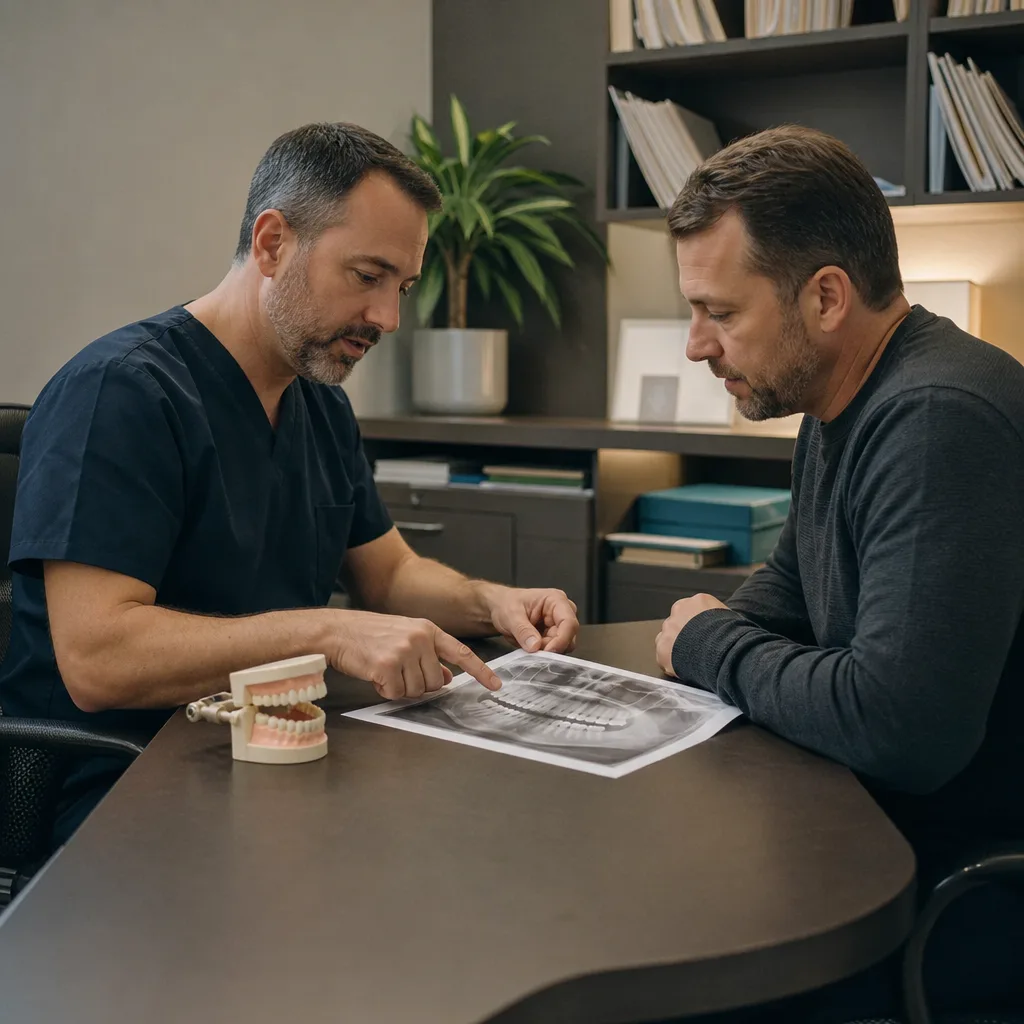
We hear this all the time. And we get why it’s tempting. Maybe your last visit to the dentist was rough. Maybe you’re worried about being lectured, or you’re nervous about what we might find. Or your schedule just doesn’t leave room for one more thing. So the question isn’t really about aligners at all. It’s about whether you can move your teeth safely without knowing what’s under them. Aligners put steady pressure on every tooth they touch. That pressure travels down to the gums and the bone holding each tooth in place. If something’s off down there, the trays can’t tell you, they just keep pushing. Before we start Invisalign Clear Aligners, a Comprehensive Dental Exam looks at the parts a photo or mail-in kit can’t reach. Here’s what we’re checking for:
- Cavities, even small ones hiding between teeth
- How healthy your gums are and whether they bleed or pull back
- Bone support around the roots, seen on Digital X-rays or 3D Dental Imaging (CBCT)
- Old fillings or crowns that might not hold up to movement
- Jaw clicking or soreness that’s worth a closer look
None of this is about scolding you. It’s about making sure the smile you’re paying for doesn’t come with a surprise later. If we spot something, we’ll talk it through and help you decide what to handle first. One patient from near Belmar came to us after starting trays on her own. Her front teeth felt loose, and she wasn’t sure what was going on. We paused, took a careful look, and built a plan that started with her gums. It took longer than she’d hoped. But she finished feeling sure about her teeth instead of worried about them. That’s the trade most people don’t think about until they’re halfway through. And if the visit itself is the hard part, tell us. You can wear noise-canceling headphones, put on a show, or ask about laughing gas. Many patients find they can relax in the chair once they know what’s coming. Our office is open Monday through Thursday, so an exam can usually fit around a workday. Call (303) 989-3192
What an In-Person Dental Exam Checks
Here’s a story about a patient we’d seen recently. She’d almost ordered an at-home aligner kit. She figured a photo and a mold were all anyone needed. Then we looked at her X-rays together, and she got quiet.

Her teeth looked fine in the mirror. But a mirror only shows the surface. That’s the worry a lot of people bring in. Is the exam just a step to sell me something? It’s a fair question. So here’s what we’re looking at, and why a mold in the mail can’t do the same job.
- Gum health, since aligners put pressure on teeth and the gums hold them in place
- Hidden cavities between teeth that a photo won’t catch
- Bone around the roots, which we check with digital X-rays and sometimes 3D imaging (CBCT)
- Old fillings, crowns, or bridges that could affect how a tray fits
- Your jaw joint, if you’ve got clicking, soreness, or TMJ symptoms
- An oral cancer screening, done as part of a regular exam
None of these show up in a selfie. And some of them matter a lot once teeth start moving. Gum health is criticial to the success of your aligner treatment. Teeth move through bone, and healthy gums help keep that bone steady. If there’s inflammation going on, moving teeth may not be the right first step. The American Dental Association notes that gum disease often has no pain in the early stages, so many people don’t know it’s there. We’d rather find it before an aligner plan starts, not halfway through it. Cavities are the next piece to consider. A small cavity hiding between two teeth is easy to miss at home, we often need an X-ray to detect it. Aligner trays cover your teeth for most of the day. You want any decay handled before that happens.
From our chair: One of the most common things we find is old dental work that’s worn down. A crown or filling that’s been there 15 years can change how a tray seats. It’s a quick thing to check in person, and it’s a hard thing to spot from a mail-in mold.
Then there’s your bite and your jaw. Some folks in Lakewood come in after years of clenching through long commutes on 6th Avenue or stressful workweeks. Clenching can show up as worn edges or a sore jaw. Shifting teeth without looking at how your jaw works is a bit like hanging a picture without checking the wall. Usually it’s fine. Sometimes it’s not. We won’t guess what you have before we look. That’s sort of the whole point of the exam. This is why our Invisalign dentist in Lakewood team starts every aligner case with a hands-on exam and imaging, not a kit in a box. The scan and X-rays help us plan each tray around your real teeth, roots, and gums. And if the exam turns up something that needs care first, like a filling or a gum disease treatment, we’ll tell you plainly. You’ll get a written treatment plan with your costs before anything begins. No surprises tucked in later. If it’s been a while since your last visit, that’s okay. We see people who haven’t sat in a dental chair in years. Noise-canceling headphones and a show on the TV can help you relax while we look around. Call (303) 989-3192 That same focus carries through the practical Invisalign clear aligners in Lakewood guidance our team provides to local families.
Dentist vs. Orthodontist vs. Mail-Order Aligners: Who Does What
A woman came into our Lakewood office halfway through an at-home aligner kit. Her new tray wouldn’t snap in over one back tooth. She thought the tray was bad, but it wasn’t. An old filling had started to break down, and nobody had ever looked at it in person.

That’s the part most people don’t think about. The trays get all the attention. But the real question is who’s watching your teeth and gums while they move. So let’s sort out who does what. There are three main routes, and they’re more different than the ads make them look. General dentist vs. orthodontist. A general dentist cares for your whole mouth. That means cleanings, fillings, crowns, gum health, and checkups. Many general dentists also take extra training to offer Invisalign Clear Aligners. An orthodontist is a dentist who did a few more years of school focused only on moving teeth and jaws. For mild to moderate crowding or spacing, a trained general dentist is often a good fit. For complex bite or jaw problems, an orthodontist may be the better call. Here’s the thing both have in common. You sit in a chair, someone looks in your mouth, and they take X-rays. Mail-order aligners work a different way. You take molds at home or get a quick scan at a storefront. A licensed dentist somewhere reviews your photos and files. Then trays show up in your mailbox. It’s convenient, no question. And for some people it seems like the easy choice. But convenience has gaps. In our experience, these are the things at-home kits usually skip:
- Digital X-rays that show bone levels and roots under the gums
- A hands-on gum check before teeth start shifting
- Spotting cavities, cracked fillings, or worn crowns that trays can press on
- Regular in-person visits to see if teeth are tracking the way they should
- Someone nearby to call when a tray stops fitting or a tooth gets sore
None of these are small things. Moving teeth puts steady pressure on roots and bone. If there’s gum disease or decay hiding underneath, that pressure can make it worse. The American Dental Association has said it discourages moving teeth without an in-person exam for exactly this reason. Does that mean every at-home kit ends badly? No. We’ve seen people do fine, and we’ve seen people end up in our chair needing repairs first. The difference usually comes down to what was going on in their mouth before they started, and nobody checked.
A quick way to think about it: a general dentist looks at your whole mouth and can guide simpler aligner cases. An orthodontist focuses on harder bite and jaw cases. A mail-order kit sends trays, but nobody’s looking at your teeth in person.
At our practice, every Invisalign Clear Aligners case starts with an exam, digital X-rays, and a cleaning if you’re due. We fix what needs fixing first. Then we plan the tooth movement. If your case looks like it needs a specialist, we’ll tell you that straight. That’s a better outcome than finding out on tray twelve. Call (303) 989-3192
Frequently Asked Questions
Can I get Invisalign without seeing a dentist first?
No, a safe Invisalign plan starts with an in-person exam. We check for cavities, gum health, and bone support with digital X-rays before any trays are made. That way your plan fits your real teeth and roots.
Can people tell I’m wearing Invisalign?
Usually not from normal talking distance. Stains, cloudy buildup, and trays that aren’t fully seated are what tend to catch the eye. Our guide on whether people can tell you’re wearing Invisalign covers simple ways to keep trays clear.
How many hours a day do aligners need to be worn?
Plan on about 22 hours a day. Teeth move with steady pressure, so long breaks let them drift back. We explain why in Invisalign’s 22-hour rule explained.
How many dental visits does Invisalign take?
After your first exam and scan, most patients come in every 6 to 8 weeks. These check-ins are short and let us confirm each tray is tracking. See the full visit schedule in Lakewood Invisalign for Two Creeks and West Colfax families.
Is Invisalign hard to fit into a busy work schedule?
For most adults, it fits fine. Trays come out for meals, and check-ins are spaced weeks apart. Our article on Invisalign for busy adults shares tips for workdays, travel, and business meals.
What happens if the exam finds a cavity or gum problem?
We treat it first, then start aligners once your teeth and gums are healthy. You’ll get a written treatment plan with your costs before anything begins. Our Invisalign dentist in Lakewood page explains how we plan each case.