Is that throbbing tooth keeping you up at night? Are you wincing every time you sip your morning coffee at one of Lakewood’s local cafes? You might be wondering whether you’re dealing with a minor sensitivity issue or something that requires more serious attention — like a root canal.
Here’s the thing: root canals have gotten a bad rap. Modern root canal treatment is nothing like what your parents experienced. We’re talking comfortable procedures with advanced technology that actually relieves pain rather than causing it. And recognizing the warning signs early can save your tooth and spare you from way more invasive procedures down the road.
In this guide, we’re walking through the seven most common signs you need a root canal, what’s causing these symptoms, and when it’s time to call Balanced Dental Studio here in Lakewood. No dental jargon, no scare tactics — just straight talk about what you’re experiencing and what to do about it.
How do I know if I need a root canal?

You may need a root canal if you’re experiencing one or more of these warning signs:
- Persistent, severe tooth pain — throbbing or aching that doesn’t go away, especially deep within the tooth
- Lingering sensitivity — pain from hot or cold that continues long after the food or drink is gone
- Pain when chewing or biting — sharp discomfort when pressure is applied to the tooth
- Swollen or tender gums — puffiness near the affected tooth, sometimes with a pimple-like bump
- Tooth discoloration — the tooth appears darker or grayish compared to surrounding teeth
- Loose tooth — the infection has begun weakening the bone structure
- Facial or jaw swelling — indicates the infection may be spreading
If you notice any combination of these symptoms, contact your Lakewood dentist right away. Only a dental exam with X-rays can confirm whether root canal treatment is actually necessary — but the sooner you get checked out, the better your options.
What Is a Root Canal?
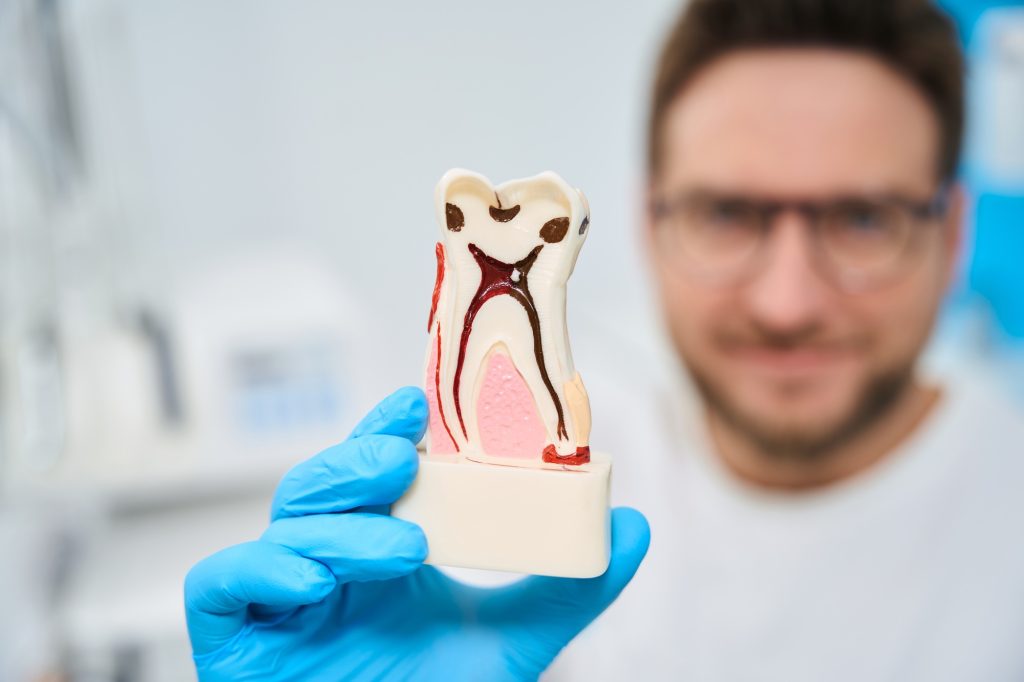
Let’s clear something up right off the bat. When people say “I need a root canal,” what they’re really talking about is root canal treatment — a procedure that removes infected or damaged tissue from inside your tooth.
Here’s how it works. Inside each of your teeth is soft tissue called pulp. This pulp contains nerves, blood vessels, and connective tissue. When the pulp gets infected or inflamed — whether from deep decay, a crack, or trauma to the tooth — that’s when problems start. The infection causes pressure to build up inside your tooth, which is where that intense, throbbing pain comes from.
Root canal treatment removes that infected pulp, cleans out the inside of your tooth, and seals it back up. The result? The pain goes away. You get to keep your natural tooth. And you can go back to eating, drinking, and living your life without that constant ache.
Modern root canal treatment is comfortable. We’re talking local anesthesia that completely numbs the area, advanced tools that make the process faster and more precise, and sedation options if you’re feeling anxious about the whole thing.
Most of our patients at Balanced Dental Studio tell us the same thing after their root canal: “That wasn’t nearly as bad as I thought it would be.” In fact, the procedure itself usually provides immediate relief because we’re removing the source of your pain.
7 Warning Signs You May Need a Root Canal

1. Persistent, Severe Tooth Pain
This isn’t the kind of pain that comes and goes when you eat something cold. We’re talking about deep, throbbing pain that just won’t quit. It might feel like it’s radiating to your jaw, your face, or even other teeth. And here’s the worst part — it wakes you up at night.
You know that dull ache you can kind of ignore during the day when you’re busy at work in the Denver Tech Center or running errands around Belmar? But then you lie down to sleep and suddenly it’s all you can think about? That’s the kind of pain we’re talking about here.
Here’s what’s happening: when the pulp inside your tooth gets infected, it creates pressure. That pressure has nowhere to go, so it just keeps building. And unlike a cut on your finger that eventually stops hurting, an infected tooth doesn’t get better on its own.
2. Lingering Sensitivity to Hot and Cold
Here’s how to tell the difference between normal sensitivity and the kind that means trouble. Take a sip of hot coffee or bite into ice cream. If you feel a quick zing that goes away within a few seconds, that’s probably just normal sensitivity. Annoying, but not an emergency.
But if that sensitivity lasts 30 seconds or longer after the hot or cold thing is gone? That’s different. That lingering pain is a sign that the nerve inside your tooth is damaged or inflamed.
Here’s a scenario we hear all the time from our Lakewood patients: “I can’t drink anything cold anymore. Even room temperature water hurts that tooth.” That’s not normal tooth sensitivity — that’s your tooth telling you the nerve is in trouble.
3. Pain When Chewing or Biting Down
Ever bite into something and feel a sharp, shooting pain in one specific tooth? Or maybe you’ve started unconsciously chewing on just one side of your mouth because putting pressure on a particular tooth just hurts too much?
This kind of pain when you bite down can mean a couple things. It could indicate a cracked tooth, an abscess at the root of the tooth, or damage to the ligaments that hold your tooth in place. Either way, it’s not something to ignore.
We see this a lot with busy professionals commuting between Lakewood and downtown Denver who are grinding their teeth at night from stress. You might not even realize you’re doing it, but over time that grinding can crack a tooth or damage the pulp inside.
4. Swollen or Tender Gums
Take a look at your gums around the tooth that’s bothering you. Are they puffy? Red? Tender when you touch them? That swelling is your body’s response to infection.
When you have an infection at the root of your tooth, your immune system kicks into gear. Blood flow increases to the area to fight off the infection, which causes swelling and tenderness. The gum tissue might feel tight or painful to the touch. You might notice it more when you’re brushing your teeth or eating.
Swollen gums around a tooth, especially if it’s accompanied by pain, is your body’s way of telling you there’s an active infection that needs professional treatment.
5. Pimple-Like Bump on the Gums (Dental Abscess)
If you see a small, pimple-like bump on your gums near a tooth, that’s called a fistula (or sometimes a “gum boil”). What’s happening here is the infection has gotten so bad that your body is trying to drain it. That bump is literally a drainage pathway for the pus from the infected tooth.
Even if that bump comes and goes, even if it drains and you feel better for a bit, the infection is still there. This is one of those situations where you need to call Balanced Dental Studio pretty much right away.
6. Tooth Discoloration
Here’s something that surprises people: a tooth that’s getting darker or turning grayish compared to your other teeth can be a sign that the pulp inside is damaged or dying. And here’s the really sneaky part — this can happen without any pain at all.
This is especially common with teeth that experienced trauma — maybe you got hit playing recreational sports at Green Mountain or William F. Hayden Park, or you fell and bumped your tooth when you were a kid. Sometimes the damage to the pulp doesn’t show up right away. It can take months or even years for the tooth to start darkening.
7. Facial or Jaw Swelling
If you’re experiencing facial swelling, jaw swelling, or swelling in your neck along with tooth pain, this is “call your dentist immediately” territory. Like, today. Right now.
This kind of swelling means the infection isn’t contained to just the tooth anymore — it’s spreading to surrounding tissues. If you’re seeing swelling in your face or jaw, especially if it’s accompanied by fever, difficulty swallowing, or difficulty breathing, you need emergency dental care.
What Happens If You Ignore the Signs?

Here’s what we tell our patients throughout Lakewood, Green Mountain, and the surrounding areas: early treatment almost always means simpler treatment. Waiting doesn’t make things easier — it makes them harder.
When you ignore signs you need a root canal, the infection spreads. It can affect the surrounding bone, neighboring teeth, and in serious cases, spread to your jaw or sinuses. The tooth structure breaks down, becoming brittle and weak. Eventually, the tooth might break beyond repair — and then we’re talking about extraction and replacement options like implants or bridges.
You’ll need more extensive treatment, longer healing times, and yes, higher costs. Most patients who come in for emergency appointments tell us they wish they’d come in sooner.
What to Expect at Balanced Dental Studio

When you come to our Lakewood office for an evaluation, here’s what you can expect: we’ll take a thorough look at the tooth, probably take some X-rays to see what’s going on below the gum line, and talk with you about what we find. If you do need a root canal, we’ll walk you through exactly what that involves and answer all your questions.
The procedure usually takes between 60 and 90 minutes. We numb the area completely, access the inside of the tooth, clean out the infected pulp, and fill and seal the tooth. Most patients go back to work or their regular routine the next day. In fact, many of our patients who work in the Denver Tech Center or locally in Lakewood schedule late afternoon appointments and are back to normal the next morning.
With proper care, a tooth that’s had a root canal can last the rest of your life. We’re talking decades of function.
Ready to Get Relief?
If you’re experiencing any of these warning signs, don’t wait. Balanced Dental Studio is right here in Lakewood, conveniently located for residents throughout the area including Green Mountain, Morrison, and west Denver.
Your tooth is trying to tell you something. Give us a call today — we’ll take great care of you and get you out of pain.
FAQ
What’s the difference between a root canal and a tooth extraction?
A root canal saves your natural tooth by removing the infected pulp inside while keeping the tooth structure intact. An extraction removes the entire tooth. Here’s why that matters: your natural teeth are always the best option for your oral health.
When you lose a tooth, the surrounding teeth can shift, your jawbone can deteriorate over time, and you’ll need a replacement option like a dental implant, bridge, or partial denture. Root canals have a 95% success rate, and with proper care (and usually a crown to protect the tooth), that tooth can last your entire life.
Extraction might seem like the simpler option, but it’s actually more invasive and often more expensive in the long run when you factor in replacement costs. At our Lakewood office, we always prioritize saving your natural tooth whenever possible. That said, there are cases where extraction is the better choice — and we’ll always be honest with you about what’s best for your specific situation.
Can I drive myself home after a root canal?
Yes, in most cases you can absolutely drive yourself home after a root canal. The local anesthesia we use numbs the tooth and surrounding area, but it doesn’t affect your ability to drive safely. Most of our Lakewood patients drive themselves to and from their appointments without any issues.
However, if you choose sedation options beyond local anesthesia — like oral sedation or IV sedation to help with dental anxiety — you’ll need someone to drive you home. These sedation methods can make you drowsy and affect your reaction time for several hours after the procedure.
Here’s what we recommend: if you’re just getting local anesthesia (which is what most root canal patients choose), plan your day normally. Many of our patients who work in the Denver Tech Center or around Lakewood schedule afternoon appointments and go right back to work the next day. If you’re considering sedation, arrange for a ride home and plan to take it easy for the rest of the day.
Not sure which option is right for you? We’ll discuss all of this during your consultation at Balanced Dental Studio.