I often come across patients dealing with tartar buildup, which manifests as those yellow or brown stains on the surface of teeth. Beyond just being unsightly, tartar poses serious risks to oral health, including gum disease and tooth decay. So, what is tartar?
Let’s dive into what tartar is, how it affects you, and how we can effectively manage it to maintain a healthy, confident smile!
What is Tartar?
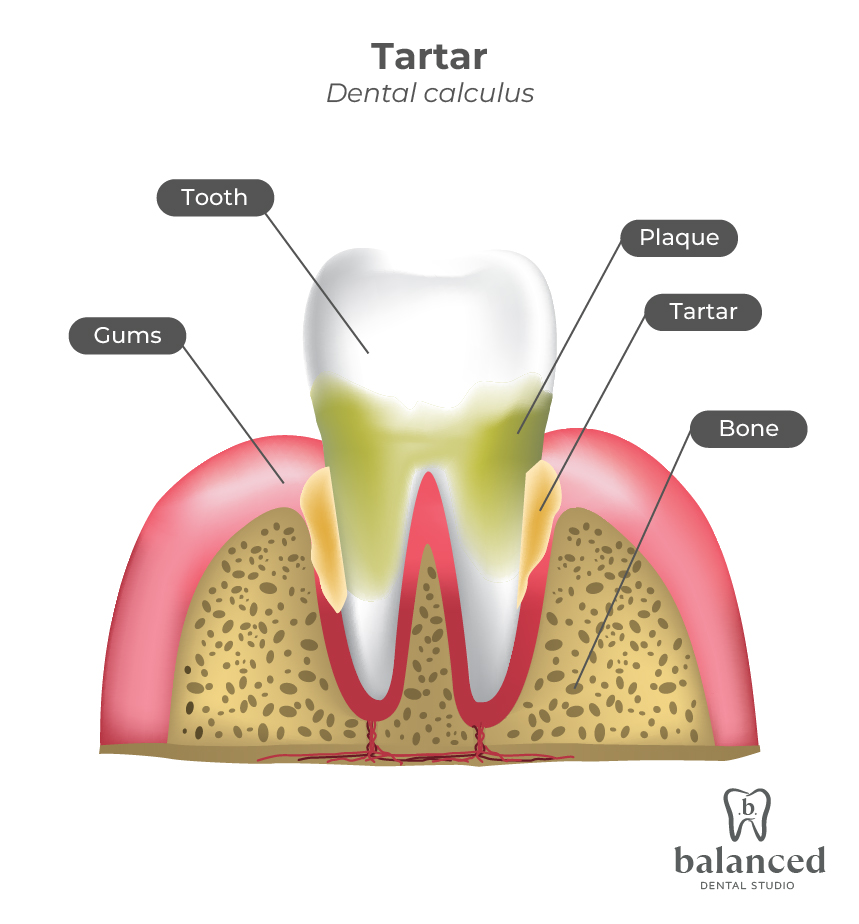
Tartar, or calculus, forms when bacteria in your mouth mix with food particles and proteins, creating a sticky film known as dental plaque. If left unchecked, plaque hardens over time as minerals from saliva join the mix, leading to the formation of tartar.
Now, here’s the thing about tartar—it’s not something you can tackle on your own. While you can manage plaque through a diligent oral hygiene routine, tartar requires the expertise of a dentist to remove.
It starts with a bacteria many of us have in our mouth, Strep mutans. S. mutans thrives with sugar and complex carbohydrates. It, along with millions of other bacterial cells, creates a biofilm layer on your teeth, which is called plaque. That plaque begins to harden and strengthen in as little as 6 hours! Once it becomes tartar, it’s near impossible for you to get it off safely without a dentist’s help.
What Risks Does Tartar Build-Up Pose?
Why is tartar such a big deal? Well, besides its unattractive appearance, tartar provides a perfect breeding ground for harmful oral bacteria. These bacteria feast on sugars, producing acids that corrode tooth enamel and cause decay.
Moreover, tartar’s rough surface encourages more plaque buildup, setting the stage for gum inflammation, or gingivitis, which, if left untreated, can progress to periodontal disease—a severe condition associated with tooth loss and even broader health issues like heart disease.
But tartar isn’t just a physical health concern; it can also dent your confidence. Tartar buildup often leads to bad breath, or halitosis, which can be quite embarrassing in social settings.
How Do We Fight Tartar Build-Up?
So, how do we tackle tartar? Professional dental cleaning is the gold standard. Using specialized tools, we scrape away tartar from both above and below the gum line.
In cases of significant buildup, a deeper cleaning called scaling and root planing may be necessary to ensure thorough tartar removal and prevent gum disease progression.
For at-home maintenance, Nano-hydroxyapatite toothpaste is your friend! Nano-hydroxyapatite helps to remineralize your teeth, helping to stave off decay. Additionally, there are some DIY remedies you can try, like aloe vera, baking soda, and white vinegar, though these should complement—not replace—regular dental visits and professional cleanings.
Prevention is key when it comes to tartar control. Brushing and flossing daily, using ADA-approved dental tools, and making sure to schedule regular checkups with your dentist are crucial habits to adopt. Lifestyle changes like quitting smoking, watching your diet, and staying hydrated also play a significant role in reducing tartar formation.
Discover Whole Health Dentistry at Balanced Dental Studio
At our Lakewood, CO dental studio, we’re not just about fixing smiles; we’re committed to your overall health and well-being. Through personalized, functional care, we aim to boost your confidence and satisfaction with your dental health.
So, if you’re looking for a dental experience that prioritizes your quality of life, come see us at Balanced Dental Studio. We’re here to ensure your smile stays bright, healthy, and tartar-free!
FAQ
Q: What exactly is tartar and how does it differ from plaque? A: Tartar (calculus) is hardened plaque that forms when bacteria, food particles, and minerals from saliva combine on teeth. While plaque is soft and can be removed with brushing, tartar bonds to teeth and requires professional scaling and root planing at our Lakewood dental office for safe removal.
Q: How quickly does plaque turn into tartar on my teeth? A: Plaque can begin hardening into tartar in as little as 6 hours! This rapid transformation is why we recommend brushing twice daily and scheduling regular professional cleanings to prevent tartar buildup that leads to gum disease.
Q: Can I remove tartar at home with special toothpaste or tools? A: No, once tartar forms, it cannot be safely removed at home. Only professional dental instruments used during scaling procedures can effectively remove tartar without damaging teeth. Home remedies like baking soda may help prevent buildup but won’t remove existing tartar.
Q: What happens if I don’t get tartar removed professionally? A: Untreated tartar creates a breeding ground for harmful bacteria, leading to gum inflammation (gingivitis), periodontal disease, tooth decay, and bad breath. Advanced gum disease has been linked to serious health issues including heart disease, making regular cleanings essential.
Q: How often should I get professional tartar removal? A: Most patients benefit from professional cleanings every 6 months. However, those with significant tartar buildup or gum disease may need scaling and root planing more frequently. Our Lakewood team will create a personalized cleaning schedule based on your oral health needs.
Q: What is scaling and root planing, and when is it necessary? A: Scaling and root planing is a deep cleaning procedure that removes tartar from above and below the gum line and smooths tooth roots. It’s necessary when regular cleanings aren’t sufficient due to significant buildup or when treating gum disease at Balanced Dental Studio.
Q: How can I prevent tartar buildup between dental visits? A: Prevent tartar by brushing twice daily with nano-hydroxyapatite toothpaste, flossing daily, staying hydrated, limiting sugary foods, and avoiding smoking. These habits, combined with regular professional cleanings, keep tartar under control.
Q: Does tartar removal hurt during professional cleaning? A: Most patients experience minimal discomfort during routine tartar removal. For deeper scaling and root planing procedures, we offer comfort options including local anesthesia to ensure a pain-free experience at our Lakewood practice.