Spring is approaching! Bringing with it the promise of warmer weather and blooming flowers, many of us here in Lakewood, CO, anticipate the change in seasons. However, alongside the beauty of spring often comes the arrival of allergies. While most people don’t associate seasonal allergies and dental health, sneezing, itchy eyes, and congestion are just a few of the symptoms.
I’m excited to dive deeper into this topic to provide valuable insights into how seasonal allergies affect your oral health. I’ll also offer practical tips from Balanced Dental Studio to manage these issues effectively!

Understanding the Causes of Seasonal Allergies
In exploring the connection between seasonal allergies and dental health, I’ve found that it’s important to note what causes these allergic reactions. Seasonal allergies, also known as hay fever or allergic rhinitis, happen when our immune system overreacts to allergens present in the environment.
Common allergens include pollen, grass, and mold spores, which are more prevalent during certain times of the year. To check the current allergen levels in Lakewood, you can use helpful tools like IQAir for Denver, or The Weather Channel’s pollen count. When these allergens enter our system, our immune system releases histamines, triggering symptoms, including sneezing, congestion, and itchy eyes.
The Impact of Allergy Congestion on Dental Health
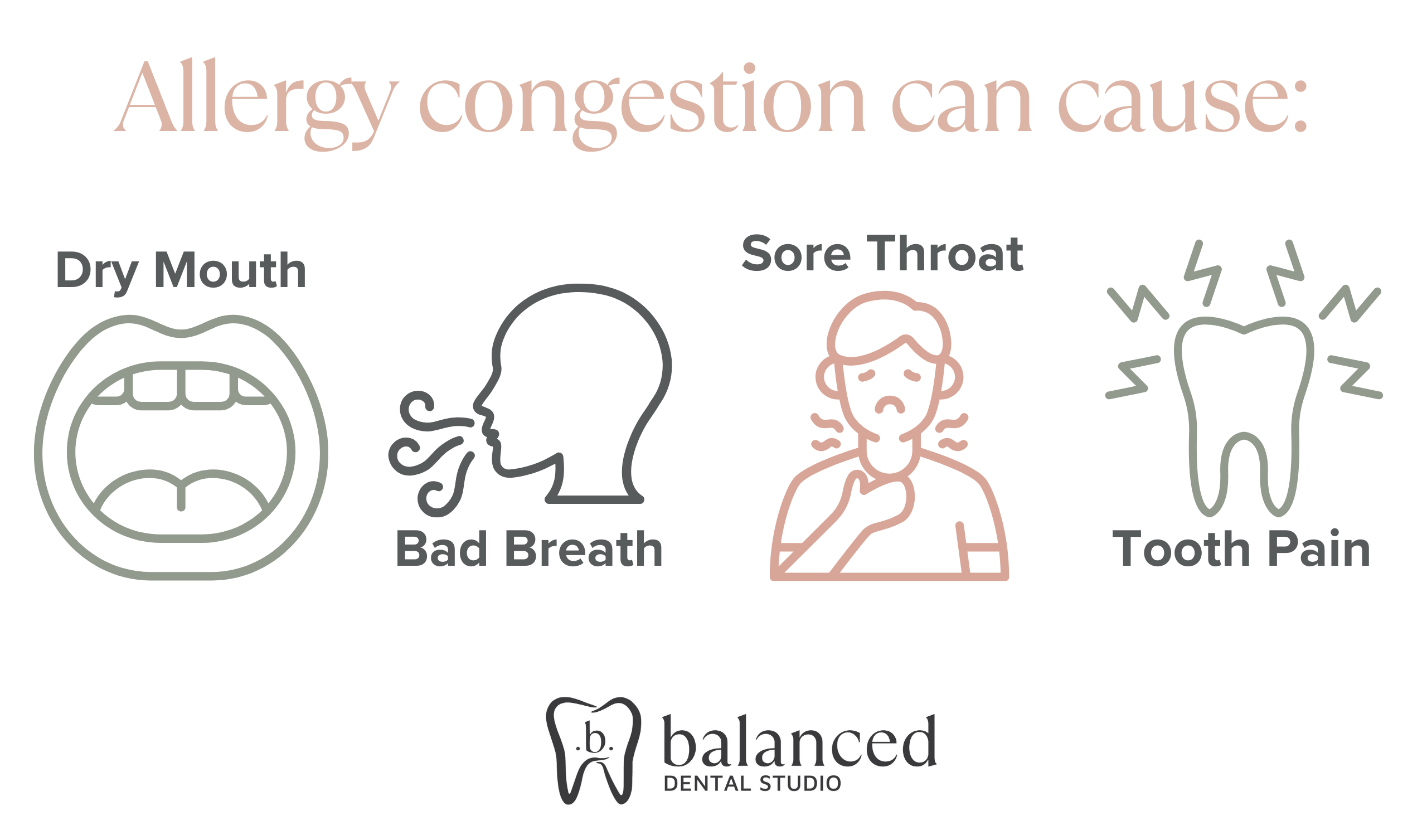
While the respiratory symptoms of seasonal allergies are well-known, their effects on dental health are often overlooked. Here’s how allergy congestion can lead to various oral health issues:
- Dry Mouth: Congestion can make it difficult to breathe through the nose, leading to mouth breathing. This can result in dry mouth, a condition characterized by a lack of saliva production. Without enough saliva to rinse away food particles and neutralize acids, you have a bigger chance of having tooth decay and even gum disease.
- Sore Throat: Post-nasal drip, a common symptom of allergies, can irritate the throat, leading to discomfort and inflammation. Persistent sore throat symptoms can make it uncomfortable to swallow and speak, increasing the dry mouth and bad breath associated with allergy-related oral health issues.
- Tooth Pain: Sinus pressure from allergies can cause tooth pain, particularly in the upper back teeth. This pain may be mistaken for a dental issue, leading individuals to seek unnecessary treatment when addressing the underlying allergy symptoms is the key to relief.
- Bad Breath: Dry mouth and post-nasal drip can contribute to halitosis or bad breath. Bacteria thrive in a dry environment, leading to the production of foul-smelling gasses. Additionally, post-nasal drip can introduce odorous substances to the back of the throat, further contributing to bad breath.
Taking Control of Seasonal Allergies and Dental Health Issues
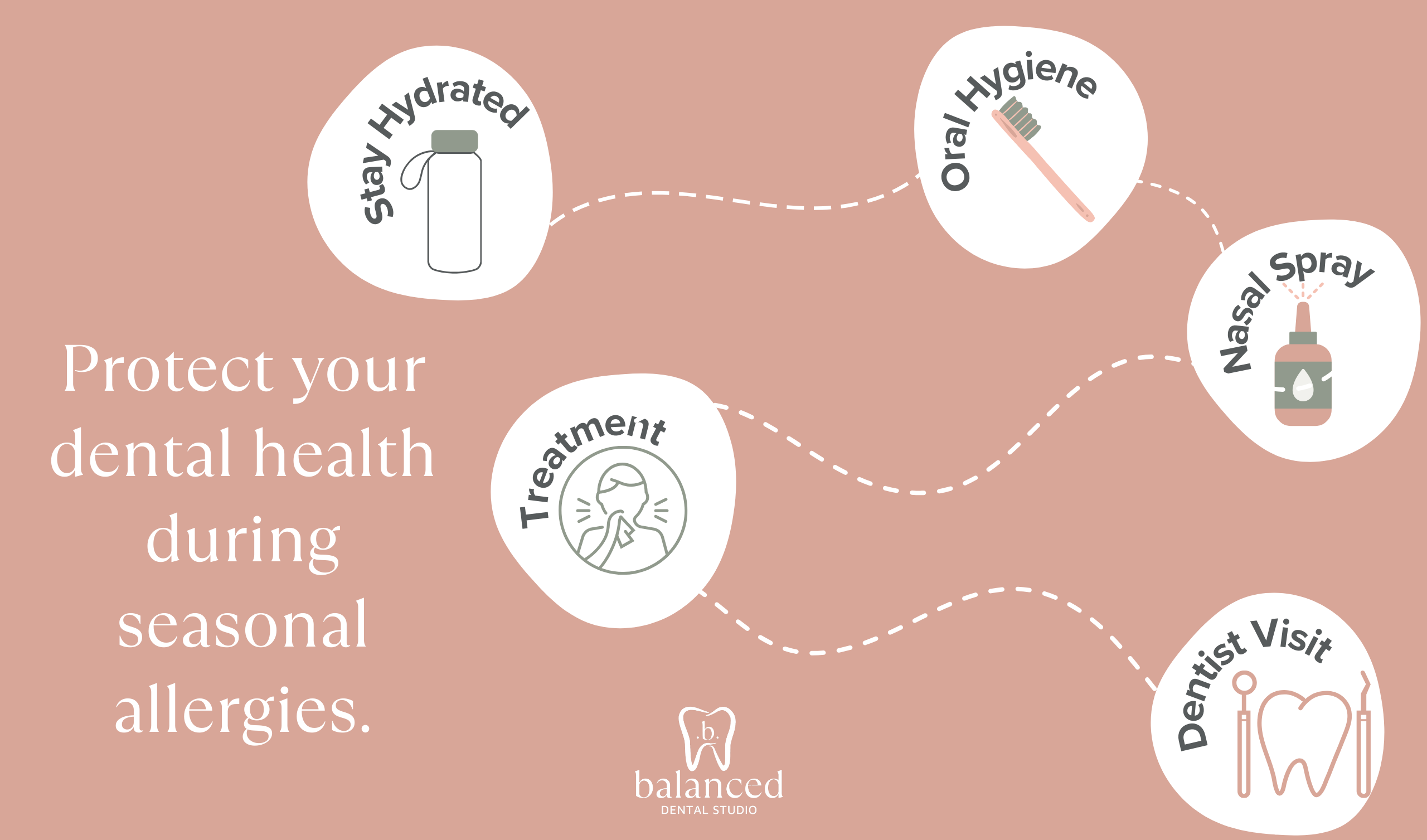
Now that you understand how seasonal allergies can impact dental health, here are some practical strategies for managing these issues:
- Stay Hydrated: Drinking plenty of water helps maintain saliva production and prevents dry mouth. Opt for water over sugary or acidic beverages, which can contribute to tooth decay. Additionally, using a humidifier in your home can help alleviate dry mouth symptoms caused by indoor heating or air conditioning.
- Practice Good Oral Hygiene: Brushing and flossing regularly remove plaque and bacteria from the mouth, reducing the risk of tooth decay and gum disease. Consider using hydroxyapatite toothpaste and antimicrobial mouthwash to further protect your oral health. Additionally, incorporating tongue scraping into your oral hygiene routine can help remove bacteria and debris that contribute to bad breath.
- Use Saline Nasal Sprays: Saline nasal sprays can help clear congestion and moisturize nasal passages, reducing post-nasal drip and sore throat symptoms. These sprays are safe and effective for relieving allergy-related congestion without the side effects of decongestants.
- Seek Allergy Treatment: If your seasonal allergies are severe or persistent, consider seeking treatment from an allergist. They can recommend medications such as antihistamines, nasal corticosteroids, or allergy shots to help manage your symptoms effectively. Identifying and avoiding triggers like pollen or mold can also help reduce allergic reactions.
- Visit Your Dentist Regularly: Regular dental check-ups are essential for maintaining good oral health, especially if you’re experiencing allergy-related issues. Your dentist can identify any dental problems early on and provide personalized care to address them. Additionally, they can offer guidance on managing dry mouth and bad breath associated with allergies.
Get Ahead of Your Seasonal Allergies and Dental Health Issues
As you take in all of the wonderful things springtime in Colorado has to offer, keep in mind the importance of prioritizing your overall health. By taking proactive steps to manage seasonal allergies and maintain good oral hygiene, you can make sure that your smile remains healthy and vibrant – all season long!
Schedule your dentist appointment with Balanced Dental Studio today and let me help you achieve a healthier, happier smile!
FAQ
Q: Can seasonal allergies really affect my dental health?
A: Yes, seasonal allergies can significantly impact your oral health through mouth breathing, dry mouth, sinus pressure, and post-nasal drip, all of which increase risks for tooth decay and gum disease.
Q: Why do my upper teeth hurt during allergy season?
A: Sinus pressure from allergies can cause tooth pain in your upper back teeth due to the proximity of your sinus cavities to your tooth roots. A comprehensive dental exam can help distinguish between sinus-related and actual dental pain.
Q: How does mouth breathing from allergies damage my teeth?
A: Mouth breathing reduces saliva production, creating dry mouth conditions where harmful bacteria thrive, leading to increased risks of cavities, gum disease, and bad breath.
Q: What dental care should I focus on during allergy season?
A: Maintain excellent oral hygiene with regular brushing and flossing, stay well-hydrated, and consider using antimicrobial mouthwash to combat bacteria that flourish in dry mouth conditions.
Q: When should I see a dentist about allergy-related dental symptoms?
A: Schedule a dental checkup if you experience persistent tooth pain, chronic bad breath, or dry mouth symptoms during allergy season to rule out dental issues and receive personalized care recommendations.
Q: Can allergy medications affect my oral health?
A: Some allergy medications can contribute to dry mouth as a side effect. Your dentist can recommend strategies to manage medication-related dry mouth during your regular dental cleaning and exam.
Q: How often should I have dental checkups if I suffer from seasonal allergies?
A: Regular dental checkups every six months remain important, with possible additional visits during peak allergy seasons if you experience persistent oral health symptoms related to your allergies.