Your teenager comes home from basketball practice holding their mouth. Or maybe you’re halfway through dinner and feel that unmistakable crack when you bite down on something you shouldn’t have. In that moment—heart racing, mind spinning—one question takes over everything else: Is this a dental emergency that needs immediate care, or can this wait until Monday?
If you’ve ever scrambled to Google dental emergency symptoms at 9 PM on a Saturday night, you’re not alone. And honestly? The panic that comes with a dental injury or sudden toothache is totally understandable. Especially when you’re a parent trying to figure out if you need to cancel all your plans and rush to find help, or if everyone’s going to be okay with some ice and ibuprofen.
Here’s what we know from years of helping families across Lakewood, Applewood, Wheat Ridge, Arvada, Edgewater, and the Green Mountain area: most people either dramatically overreact (calling the ER for something that could wait 48 hours) or dramatically underreact (ignoring something that’s actually serious). Neither scenario ends well—one wastes time and money, the other risks losing a tooth or letting an infection spread.
Living in Colorado means our families are active. Kids on the ski slopes, adults mountain biking, teens playing soccer—it all adds up to a higher chance of dental injuries than you might expect. And when something happens, you need to know what you’re dealing with.
This guide is going to walk you through exactly that. We’ll cover which symptoms actually qualify as true emergencies, what can safely wait for a scheduled appointment, step-by-step instructions for handling common situations at home, and when to head to the ER versus calling your dentist. By the end, you’ll have a clear framework for making smart decisions—without the panic.
What to Do If You Have a Dental Emergency

If you have a dental emergency, immediately call your dentist for same-day care. If you experience severe bleeding, facial swelling, difficulty breathing, or trauma to the jaw, go directly to the emergency room.
What to Do in a Dental Emergency:
- Stay calm and assess the severity of the situation
- Call your dentist for an emergency appointment (most practices reserve same-day slots)
- Control bleeding with clean gauze and gentle pressure
- Save any tooth fragments or a knocked-out tooth (store in milk)
- Apply a cold compress to reduce swelling and pain
- Avoid aspirin directly on gums—it can burn tissue
- Go to the ER if you have uncontrollable bleeding, facial swelling, broken jaw, or difficulty breathing
The key thing to remember? Time matters. A knocked-out tooth has the best chance of being saved if you get to a dentist within 30 to 60 minutes. An infection that’s causing facial swelling can spread quickly and become dangerous. But a small chip with no pain? That can usually wait a day or two without any problems.
Now let’s break down exactly what qualifies as a true dental emergency—and what doesn’t.
What Counts as a Dental Emergency?
Not every dental problem needs same-day care. But some absolutely do—and knowing the difference can save you a tooth, prevent a serious infection, or just save you from an unnecessary trip to the emergency room.
Let’s break this down into three categories so you can quickly figure out where your situation falls.
True Dental Emergencies That Need Immediate Care
These situations require same-day treatment. Don’t wait, don’t “see how it feels in the morning”—call your dentist right away or head to the ER if it’s after hours and severe.
- Knocked-out permanent tooth – This is incredibly time-sensitive. You have a 30 to 60 minute window for the best chance of saving the tooth.
- Severe, uncontrollable bleeding from the mouth – If bleeding doesn’t slow down after 15 minutes of firm pressure with gauze, you need professional help.
- Facial or jaw trauma – Especially if you suspect a fracture. This often happens during sports, car accidents, or falls.
- Significant swelling in the mouth, face, or neck – Swelling that’s spreading or making it hard to swallow or breathe is a medical emergency.
- Signs of infection or abscess – Fever, swelling, pus, difficulty swallowing—these can become dangerous fast.
- Cracked or broken tooth with exposed nerve – You’ll know because the pain is severe and often comes with extreme sensitivity.
Urgent Dental Issues That Need Same-Day or Next-Day Care
These aren’t life-threatening, but they shouldn’t wait more than a day or two. The longer you wait, the more complicated (and expensive) the fix becomes.
- Chipped or cracked tooth without severe pain
- Lost filling or crown
- Broken orthodontic wire that’s cutting into your cheek or gums
- Persistent toothache that keeps getting worse
- Object stuck between teeth that you can’t remove with floss
Dental Concerns That Can Wait for a Scheduled Appointment
Good news—not everything is urgent. These issues are worth addressing, but you don’t need to rearrange your whole week to handle them.
- Minor tooth sensitivity that comes and goes
- Small chip with no pain or sharp edges
- Lost retainer
- Routine discomfort after recent dental work (some soreness is normal)
- Cosmetic concerns like staining or minor crowding
Here’s a quick reference to help you decide:
| Situation | Category | Action |
|---|---|---|
| Knocked-out tooth | Emergency | Call dentist immediately |
| Facial swelling with fever | Emergency | Same-day care or ER |
| Broken tooth with severe pain | Emergency | Same-day care |
| Chipped tooth, no pain | Urgent | Schedule within 24-48 hours |
| Lost crown | Urgent | Schedule within 24-48 hours |
| Minor sensitivity | Can Wait | Schedule routine appointment |
| Small cosmetic chip | Can Wait | Schedule routine appointment |
According to the American Dental Association, over 2 million Americans visit the emergency room each year for dental problems—and most of those visits could’ve been handled more effectively (and affordably) by a dentist. Knowing which category your situation falls into helps you get the right care in the right place.
Common Dental Emergency Symptoms and What They Mean
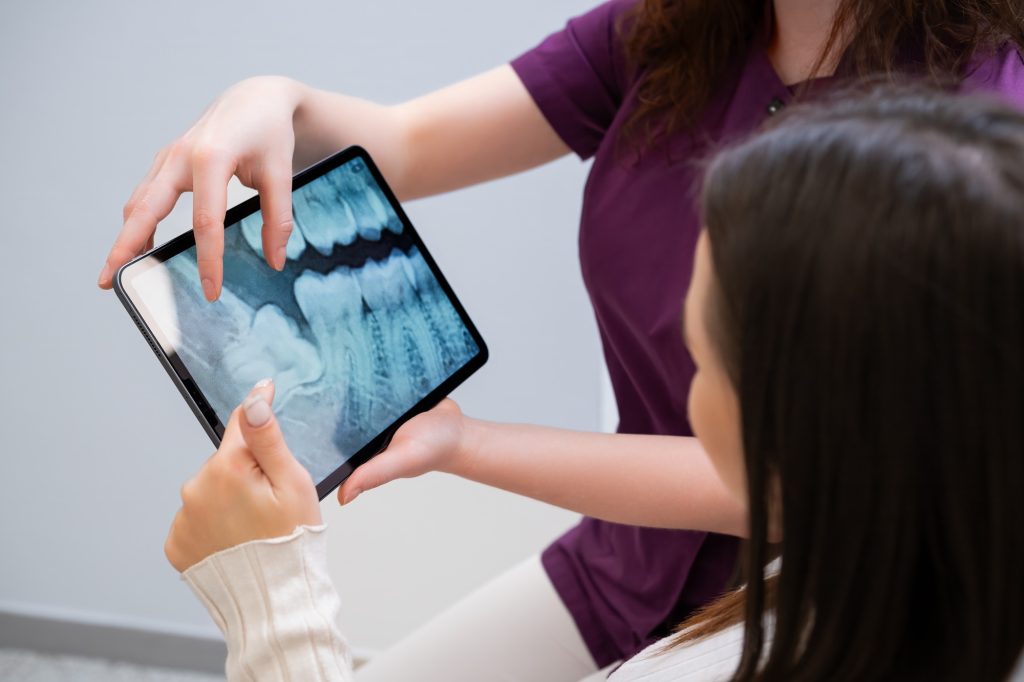
Understanding what your symptoms actually mean helps you make better decisions about when to seek care. Here’s what to watch for.
Severe Toothache That Won’t Go Away
A toothache that wakes you up at night or throbs constantly isn’t something to push through. This kind of pain usually means something’s wrong beneath the surface—an infection, decay that’s reached the nerve, or a crack you can’t see.
Warning signs that make it urgent: fever, swelling, pain that doesn’t respond to over-the-counter medication, or sensitivity to hot and cold that lingers long after you’ve finished eating or drinking.
Swelling in Your Face, Jaw, or Gums
Swelling is your body’s alarm system. When it shows up in your face, jaw, or gums, it usually means infection—and dental infections don’t stay put. They can spread to your airway, your bloodstream, even your brain in rare cases.
Red flags that mean you need care now: difficulty swallowing or breathing, fever, swelling that’s spreading toward your neck or eye area. Don’t apply heat (it makes swelling worse) and don’t wait this one out.
Knocked-Out or Loose Permanent Tooth
This happens more than you’d think—especially with active kids playing sports or adults taking a tumble on a ski slope or bike trail. The good news? A knocked-out permanent tooth can often be saved if you act fast.
Quick note for parents: baby teeth shouldn’t be replanted. If your child knocks out a baby tooth, don’t try to put it back in. But permanent teeth? Every minute counts.
Broken, Cracked, or Chipped Teeth
These range from “purely cosmetic” to “extremely urgent” depending on severity. A tiny chip with no pain? Probably fine to wait a couple days. A crack that’s causing sharp, shooting pain? That likely means the nerve is exposed or the tooth is fractured deep—and you need same-day care.
Common causes include biting down on hard foods, sports injuries, and grinding or clenching (something a lot of stressed-out professionals do without realizing it).
Bleeding That Won’t Stop
Some bleeding after trauma is normal. But if you’ve been applying firm pressure with clean gauze for 15+ minutes and it’s still flowing, that’s not normal. Head to your dentist or the ER.
Signs of Dental Infection or Abscess
An abscess is a pocket of pus caused by bacterial infection. Symptoms include persistent throbbing pain, fever, swollen lymph nodes, a bad taste in your mouth, and visible swelling or a pimple-like bump on your gums.
This is one of those situations where busy people get into trouble. You’re swamped at work, the pain is manageable with ibuprofen, so you keep postponing. But dental infections can become serious fast—and what could’ve been a straightforward treatment becomes much more complicated.
What to Do During a Dental Emergency
Knowing what to do in the moment can make the difference between saving a tooth and losing it. Here’s your quick-reference guide.
Knocked-Out Tooth: Act Fast
- Find the tooth and pick it up by the crown (the white part)—never touch the root
- Gently rinse with water if it’s dirty, but don’t scrub or remove any tissue
- Try to place it back in the socket if possible, or store it in milk (not water)
- Call your dentist immediately—you have about 30 to 60 minutes for the best outcome
Broken or Chipped Tooth: Protect and Preserve
- Rinse your mouth with warm water
- Save any tooth fragments you can find
- Apply a cold compress to reduce swelling
- Cover any sharp edges with dental wax or sugarless gum to protect your tongue and cheeks
- Call your dentist for a same-day evaluation
Severe Toothache: Manage Pain Safely
- Rinse with warm salt water
- Gently floss around the tooth to remove any trapped debris
- Take ibuprofen (not aspirin—and never put aspirin directly on your gums)
- Apply a cold compress to the outside of your cheek
- Call your dentist—toothaches that bad don’t resolve on their own
Lost Filling or Crown: Temporary Fixes
- Keep the crown if you have it and bring it to your appointment
- Apply dental cement or denture adhesive as a temporary measure (available at most pharmacies)
- Avoid chewing on that side
- Schedule an appointment within 24 to 48 hours
When to Go to the Emergency Room vs. Your Dentist
This is where a lot of people get confused—and end up in the wrong place.
Go to the Emergency Room If You Have:
- Uncontrollable bleeding that won’t stop with pressure
- Severe facial swelling that’s affecting your breathing or swallowing
- Suspected broken or fractured jaw
- Head or facial trauma with other injuries
- High fever combined with facial or neck swelling
Call Your Dentist for Same-Day Care If You Have:
- Knocked-out or loose tooth (dentists are actually better equipped for this than ERs)
- Broken or cracked tooth with pain
- Severe toothache or suspected abscess without airway issues
- Lost crown or filling causing discomfort
- Soft tissue injuries in the mouth
Here’s the thing most people don’t realize: emergency rooms can manage your pain and prescribe antibiotics, but they typically can’t perform root canals, extract teeth, repair breaks, or replant knocked-out teeth. For most dental emergencies, your dentist provides better definitive care—and it costs significantly less.
Preventing Dental Emergencies for Your Family

The best dental emergency is the one that never happens. A few preventive steps can protect your family’s smiles.
Mouthguards for Active Kids and Teens
Custom-fitted mouthguards offer way better protection than the boil-and-bite versions from sporting goods stores. And in Colorado, where skiing, snowboarding, mountain biking, and year-round sports are part of life, they’re worth the investment.
Basketball, soccer, and skateboarding actually cause more dental injuries than football (where mouthguards are required). If your kid plays any contact or high-speed sport, a mouthguard should be part of their gear.
Breaking Bad Habits That Damage Teeth
Chewing ice, biting pens, using teeth to open packages, nail biting—these habits cause more cracked and chipped teeth than you might expect. Worth a conversation with your kids (and maybe a look in the mirror yourself).
Addressing Teeth Grinding Before It Causes Damage
Stress-related grinding and clenching is incredibly common among busy professionals. You might not even know you’re doing it—until you crack a tooth or wake up with jaw pain and headaches. A nightguard is a simple, affordable way to protect your teeth while you sleep.
Staying on Top of Regular Dental Care
Most dental emergencies are preventable. Small cavities become big problems. Minor cracks become major breaks. Regular checkups catch issues when they’re easy (and cheap) to fix.
We get it—life is busy. But postponing dental care usually costs more time and money in the long run.
Same-Day Dental Emergency Care in Lakewood
When a dental emergency strikes, you want care fast—and you want it from someone who can actually fix the problem.
For families across Lakewood, Green Mountain, Applewood, Wheat Ridge, Arvada, Edgewater, and the surrounding neighborhoods, having a dentist who reserves same-day emergency appointments makes all the difference. You get faster access than the ER, definitive treatment instead of temporary fixes, and it costs a fraction of what an emergency room visit runs.
When you call our office with an emergency, you’ll talk to real people—not a call center. We keep same-day appointments available specifically for situations like these. And if something happens after hours, we have protocols in place to help you get the care you need.
Our approach is simple: relieve your pain first, then figure out exactly what’s going on, explain your options clearly, and let you make the decision that’s right for you and your family. No pressure, no judgment if you’ve been putting off dental care (we’ve heard it all), just honest help when you need it most.
Experiencing a dental emergency right now? Call us for same-day care.
Not an emergency but overdue for a checkup? That’s okay too—schedule an appointment and let’s make sure small problems stay small.
Frequently Asked Questions About Dental Emergencies
What is considered a dental emergency?
A dental emergency is any situation involving severe pain, uncontrollable bleeding, trauma to the mouth or jaw, knocked-out teeth, or signs of infection like facial swelling and fever. These situations require same-day care. Issues like minor chips without pain, lost retainers, or slight sensitivity can usually wait for a scheduled appointment.
Can I go to the ER for a dental emergency?
You can, but in most cases your dentist is the better choice. Emergency rooms can manage pain and prescribe antibiotics, but they typically can’t extract teeth, perform root canals, repair broken teeth, or replant knocked-out teeth. The ER is the right call when you have uncontrollable bleeding, facial swelling affecting your breathing, a suspected jaw fracture, or trauma involving other injuries beyond your teeth.
How long can I wait with a knocked-out tooth?
Not long. A knocked-out permanent tooth has the best chance of being saved if it’s replanted within 30 to 60 minutes. Pick it up by the crown (never the root), gently rinse it, and either place it back in the socket or store it in milk while you get to your dentist immediately. Time really does matter with this one.
Should I go to the dentist for a toothache?
If the toothache is severe, wakes you up at night, doesn’t respond to over-the-counter pain relievers, or comes with swelling or fever—yes, call your dentist for same-day care. These symptoms often indicate infection, an abscess, or decay that’s reached the nerve. Mild, occasional sensitivity that goes away on its own can usually wait for your next regular appointment.