
If your new dentures feel bulky, strange, or downright uncomfortable right now — you’re not alone.
You just left the dental office with what’s supposed to be your “new smile” and instead of feeling confident… you’re wondering if you made a huge mistake. They feel enormous in your mouth. You’re producing enough saliva to fill a swimming pool. And the thought of eating anything more challenging than pudding? Forget about it.
Here’s what nobody tells you before you get dentures: the first week kinda sucks.
But it gets better. Way better. Most patients adapt to new dentures within 4-8 weeks, and the process gets easier every single day.
Think about the last time you got new shoes. Remember how they felt stiff and weird for the first few days? But you kept wearing them, and within a couple weeks they molded to your feet perfectly. Your dentures work the same way. Your mouth, tongue, and muscles need time to figure out this new normal.
In this guide, we’re walking you through the realistic timeline for getting used to new dentures, sharing practical tips for eating and speaking, and helping you recognize when it’s time to call your Lakewood dentist for an adjustment.
How Long Does It Take to Get Used to New Dentures?

Most patients take 4-8 weeks to fully adjust to new dentures, with the first 2 weeks being the most challenging. Here’s the realistic timeline:
Week 1: Expect soreness, excess saliva, and difficulty speaking. Stick to soft foods and practice reading aloud for 10-15 minutes daily.
Weeks 2-3: Sore spots decrease. Begin introducing firmer foods like pasta and cooked vegetables. Chew on both sides evenly to prevent dentures from shifting.
Weeks 4-6: Dentures start feeling more natural. Speech improves significantly and eating becomes easier. You’ll regain confidence in social situations.
Weeks 6-8: Most patients report their dentures feel comfortable and normal for daily activities. You’ll be eating most regular foods without thinking twice.
Full adjustment can take up to 3 months for some patients — and that’s completely normal. Wearing your dentures consistently every day (removing only at night) speeds up the adaptation process. If pain or sore spots persist beyond 2 weeks, schedule an adjustment appointment with your dentist.
Your Week-by-Week Denture Adjustment Timeline
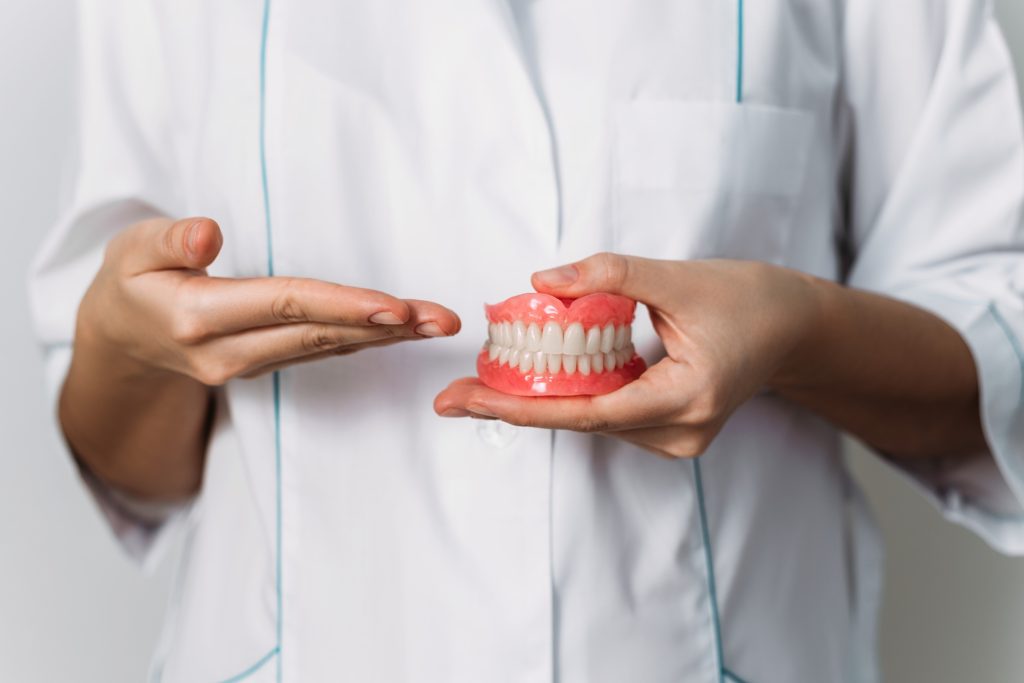
Days 1-7: The Initial Adjustment Phase
Welcome to the hardest week. Your mouth is going to feel crowded. You’ll produce extra saliva (your mouth thinks the dentures are food). And when you try to talk? You might sound like you’ve got marbles in there.
Why dentures feel so weird at first: Your tongue knew exactly where everything was. Now there’s this new foreign object taking up real estate, and your brain needs time to remap the territory. By week three, that same denture will feel half the size.
Eating tips for week one: Stick to yogurt, mashed potatoes, scrambled eggs, soup, smoothies, applesauce, and oatmeal. Cut everything into tiny pieces and chew slowly.
Speaking practice: Read aloud for 10-15 minutes every day. Your tongue needs practice navigating around the dentures. Pay special attention to words with S, F, and TH sounds.
When to call the dentist: Some discomfort is normal. Sharp, stabbing pain is not. If you’ve got bleeding or severe pain, call us. Don’t try to “tough it out.”
Weeks 2-3: Getting More Comfortable
Your saliva production drops back to normal. The dentures still feel present, but not quite as intrusive. You’re probably forgetting about them for minutes at a time.
Introducing semi-soft foods: Pasta, cooked vegetables, ground meat, soft bread, canned tuna, pancakes, and soft fruit.
Chewing technique matters: Chew on both sides at the same time. If you chew only on one side, your dentures can tip or shift.
Speech improvements: By week two, most patients notice their speech is 60-70% back to normal. Keep up the reading-aloud practice.
Common sore spots: A saltwater rinse helps (½ teaspoon salt in warm water, 3-4 times a day). If the same spot keeps bothering you after a week, come see us for an adjustment.
Weeks 4-6: Finding Your New Normal
Most patients hit week four and realize they’re not thinking about their dentures nearly as much. You’ll catch yourself eating lunch without consciously thinking about chewing technique. You’ll smile in photos without that split-second of self-consciousness.
By week five or six, you can eat most regular foods. Around week five, you’ll stop worrying about your dentures being obvious to other people.
Weeks 6-8 and Beyond: Full Adjustment
Your dentures feel like part of you. You’re not constantly aware of them. Eating is easy (with a few exceptions). Speaking is natural.
Foods that may always require caution: Whole apples (slice them), corn on the cob (cut the kernels off), super sticky foods, really tough steaks, hard nuts, and chewing gum.
Practical Tips for Eating with New Dentures

Start with soft foods and gradually progress. Add one new food every couple of days. Try it at home first, not at a restaurant.
Cut food into small pieces. Smaller than you think you need to. Your dentures don’t have the same crushing power as natural teeth.
Chew slowly and on both sides simultaneously. This keeps your dentures stable and prevents them from rocking or lifting.
Avoid sticky foods initially. Caramel, peanut butter, soft bread that turns gummy — these can pull on your dentures and break the seal.
Use denture adhesive if needed. If your dentures feel loose when you’re eating, adhesive can give you peace of mind.
Foods to avoid permanently: Whole apples, corn on the cob, really tough steaks, hard candy (don’t bite down), and popcorn kernels.
Don’t get discouraged if you have setbacks. Some days are just easier than others.
Speaking Clearly with Your New Dentures
Your tongue is a creature of habit. For your entire life, it’s been touching your teeth and the roof of your mouth in very specific spots to create different sounds. Now those spots have changed.
Practice exercises:
- Read aloud for 15 minutes daily
- Practice difficult sounds (S, F, TH)
- Count from 60-90 slowly
Swallowing technique: Before you start speaking, bite down gently and swallow. This repositions your dentures into their optimal spot.
Timeline: Most speech issues resolve in 2-3 weeks. By week two, you’ll sound pretty much normal to other people.
When altered speech indicates a fit problem: If you’re at week four and still struggling with basic words, or if your dentures click when you talk, we need to see you for an adjustment.
Managing Discomfort and Sore Spots
Normal soreness vs. problematic pain: That achy feeling at the end of the day during week one? Normal. A sharp, stabbing pain in one specific spot? Not normal.
Saltwater rinse protocol: Mix ½ teaspoon of salt in warm water. Swish it around 3-4 times a day. Salt water reduces inflammation and speeds up healing.
When to remove dentures temporarily: If you’ve got a spot that’s really bothering you, take your dentures out for a few hours. But don’t leave them out for days.
Red flags:
- Bleeding beyond day one
- White patches on your gums
- Pain lasting beyond 2 weeks in the same spot
- Sores that aren’t healing
- Dentures that hurt so bad you can’t wear them for more than an hour
At Balanced Dental Studio, we typically schedule 2-3 follow-up appointments in your first month to make sure everything’s fitting well. We’d rather you call us “too early” about a problem than wait until it’s turned into something worse.
Daily Denture Care During Adjustment
Wear them consistently, except overnight. Your mouth needs consistent exposure to adjust. Aim for wearing them all day, every day (minus overnight).
Why overnight removal matters: Your gums need a break. Plus, wearing dentures 24/7 can lead to fungal infections and bone loss.
Cleaning routine: Brush your dentures daily with denture cleaner (not regular toothpaste — it’s too abrasive). Use a soft-bristled brush.
Soak overnight in denture solution. This keeps them from drying out and kills bacteria.
Handling techniques: Clean them over a folded towel or a sink filled with water. That way if they slip, they’ve got a soft landing.
When to use denture adhesive: Apply small dots or thin strips to the denture, then insert and bite down firmly. If you’re going through a whole tube every week, something’s wrong with the fit.
When to Call Your Lakewood Dentist
Call us if you’re experiencing:
- Persistent bleeding or sores after 2 weeks
- Dentures that slip constantly despite adhesive
- Severe pain that interferes with eating
- Difficulty swallowing
- Changes in how dentures fit
- Clicking or popping sounds while eating
- Visible cracks or damage to dentures
Experiencing any of these issues? Our Lakewood team can usually accommodate same-day adjustment appointments. We serve patients throughout the Green Mountain area and those commuting to the Denver Tech Center.
Don’t wait until a minor issue becomes a major problem.
Ready to Get Started with Dentures or Need an Adjustment?
Our Lakewood dental team specializes in creating comfortable, natural-looking dentures and supporting you through every step of the adjustment process. We schedule follow-ups, we make adjustments, and we actually answer the phone when you call with questions.
We offer flexible scheduling to accommodate busy professionals and families.
What to Expect at Your Denture Consultation:
- Comprehensive oral examination
- Discussion of full vs. partial denture options
- Custom impressions and measurements
- Timeline and cost breakdown
- Insurance and payment options
The adjustment period isn’t always easy, but it’s temporary. Eight weeks from now, you’ll be eating foods you love, smiling confidently, and probably not thinking about your dentures much at all.
Frequently Asked Questions About Adjusting to New Dentures
What should I do if my dentures feel loose after a few weeks?
Some loosening is normal as your gums adjust and shrink slightly during the first few months. However, dentures shouldn’t slip excessively when eating or speaking. If you’re experiencing constant movement despite using adhesive, contact our Lakewood office for a reline or adjustment. Most patients need at least one adjustment appointment within the first 30 days to ensure optimal fit.
Can I sleep with my dentures in?
It’s best to remove your dentures at night to give your gums a chance to rest and recover. Wearing dentures 24/7 can lead to gum irritation, bacterial buildup, and increased risk of oral infections. Clean your dentures thoroughly and soak them overnight in denture solution, then give your gums a gentle massage with a soft washcloth. This nightly routine promotes better oral health and helps your dentures last longer.
What’s the difference between full and partial dentures, and how does adjustment differ?
Full dentures replace all teeth in the upper or lower arch, while partial dentures fill in gaps when you still have some natural teeth remaining. The adjustment timeline is similar for both types—typically 4-8 weeks—though some patients find partial dentures feel less bulky since they don’t cover as much of the palate.
One key difference: partial dentures use metal clasps to attach to your existing teeth, which means your tongue and cheeks need a few extra days to get used to these connections. Whether you need full or partial dentures depends on your specific situation. Our dentures service page can help you understand which option might be right for you, or schedule a consultation to discuss your needs with our Lakewood team.
Will I be able to eat all my favorite foods again?
Most patients can return to eating their favorite foods within 6-8 weeks, though some modifications may be necessary. While you’ll be able to enjoy most foods, very sticky items (like caramel or taffy), extremely hard foods (like unpopped popcorn kernels or hard candy), and foods that require biting with front teeth (like whole apples or corn on the cob) may always require caution or alternative preparation methods. The key is cutting food into smaller pieces and chewing evenly on both sides.